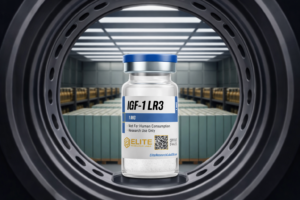
What Is IGF-1 LR3? Complete Research Peptide Guide (Structure, Benefits & Stability)
IGF-1 LR3 is a widely studied research peptide known for

Choosing the right peptide supplier is a critical step in ensuring accurate, reproducible, and reliable research outcomes. Even small sourcing mistakes can lead to inconsistent data, failed experiments, and wasted resources.
In peptide research, outcomes are only as reliable as the materials used to generate them. Yet one of the most common—and costly—mistakes researchers make happens before any experiment begins: choosing the wrong peptide suppliers.
With so many vendors in the market, it can be difficult to separate legitimate research-grade suppliers from those relying on marketing language instead of scientific standards.
Understanding how to evaluate peptide suppliers is essential for maintaining experimental accuracy and long-term research success.
This article breaks down the most common peptide supplier mistakes and how researchers can avoid them.

Cost is often the first comparison point—but in peptide research, price is a poor proxy for quality.
Low-cost peptides frequently come with hidden risks:
High-quality research peptides are produced under controlled conditions with verified testing, ensuring reliable experimental outcomes.
While cheaper options may appear attractive initially, they often introduce uncontrolled variables that compromise experimental reliability.
In research, the true cost of poor sourcing is lost time and unusable data.
Batch numbers are not optional—they are essential.
Without clear batch identification, researchers cannot:
Suppliers that fail to provide batch-specific tracking make it difficult to maintain proper research records and reproducibility.
Reliable suppliers maintain detailed batch tracking systems to ensure transparency and repeatability in research.
Learn more about our range of research peptides with full batch traceability.
Elite Research Labs assigns unique batch numbers to every product to support traceability and documentation.
A peptide purity report, or Certificate of Analysis (COA), is a foundational research document—not marketing material.
Researchers should be cautious of suppliers that:
Reviewing COA reports helps researchers confirm peptide identity, purity levels, and testing accuracy before use in experiments.
Purity verification methods such as HPLC and mass spectrometry help confirm peptide identity and composition. Without them, researchers are working with unnecessary uncertainty.
Check detailed COA reports in our Certificate of Analysis database.
One successful experiment does not validate a supplier.
Reliable research depends on:
Consistency across multiple orders ensures that experimental results are based on true scientific findings rather than material variations.
When peptides vary from one order to the next, researchers are forced to question whether outcomes reflect real findings or material differences.
Consistency is a hallmark of serious research suppliers.
Language matters.
Responsible peptide suppliers focus on:
Scientific suppliers avoid exaggerated claims and instead provide verifiable data and transparent documentation.
Researchers should be wary of vendors that emphasize outcomes, benefits, or non-research-related claims. These signals often indicate a lack of compliance or scientific rigor.
Elite Research Labs maintains strict research-only use standards and avoids promotional claims that do not belong in a laboratory context.
To avoid these common mistakes, researchers should follow a structured approach when selecting a peptide supplier:
Taking these steps helps ensure accurate data, reproducibility, and long-term research reliability.
Choosing the right supplier ensures accurate research results, consistent materials, and reliable experimental outcomes.
A Certificate of Analysis (COA) is a document that verifies peptide purity, composition, and testing methods.
Quality can be verified through COA reports, batch tracking, and lab testing methods like HPLC and mass spectrometry.
All peptides supplied by Elite Research Labs are intended solely for laboratory and research use and are not approved for human or animal consumption.
Choosing a peptide supplier is not a purchasing decision—it’s a research decision.
By avoiding common sourcing mistakes and prioritizing quality, transparency, and consistency, researchers can protect the integrity of their work and produce data they can trust.
???? Explore our research-grade peptides to support reliable laboratory research.
Elite Research Labs supports researchers by providing high-quality, tested, and traceable peptide materials for scientific use.
IGF-1 LR3 is a widely studied research peptide known for
Research peptides can degrade over time, affecting their stability, purity,

Research peptide storage directly impacts stability, purity, and experimental accuracy.
Choosing a reliable source for research peptides is essential to