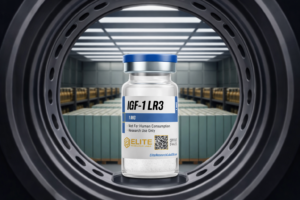
What Is IGF-1 LR3? Complete Research Peptide Guide (Structure, Benefits & Stability)
IGF-1 LR3 is a widely studied research peptide known for

Research peptide stability directly affects experimental accuracy, reproducibility, and data reliability. Understanding how long peptides last helps researchers maintain consistency and prevent degradation-related errors in laboratory studies.
Research peptides used in laboratory environments can vary widely in their stability depending on storage conditions, molecular structure, and preparation methods. One of the most common questions researchers ask is how long research peptides last before degradation begins to affect experimental results.
Peptide stability is a key factor in ensuring reliable and repeatable research outcomes, especially in long-term experiments.
Understanding peptide stability is critical when designing laboratory experiments, particularly when peptides are stored for extended periods or prepared for solution-based studies.
Many peptides used in laboratory research, including BPC-157, TB-500, and GHK-Cu, are examined for their stability characteristics under different experimental conditions.
Explore our research peptides for laboratory use
Several factors influence peptide stability in laboratory environments.
These include:
Each of these factors can accelerate or slow down peptide degradation, directly impacting research results.
Researchers studying peptide signaling must consider these variables carefully when preparing compounds for experimental use.
Controlling these variables helps reduce experimental variability and improves data consistency.
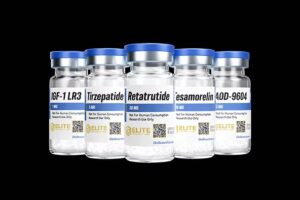
Peptides involved in metabolic research, such as Tirzepatide and Retatrutide, are also studied for their stability in laboratory conditions.
Many research peptides are stored in lyophilized (freeze-dried) form because this significantly improves long-term stability.
Lyophilized peptides generally last longer because moisture removal slows down chemical degradation processes.
Lyophilization removes moisture from the compound, reducing the likelihood of degradation before the peptide is prepared for laboratory experimentation.
Properly stored lyophilized peptides can remain stable for extended periods under controlled conditions.
Researchers working with peptides frequently review studies involving lyophilized peptides in scientific research to better understand compound stability.
Learn more about peptide storage best practices
Once a peptide has been reconstituted into solution, its stability often decreases compared to the lyophilized form.
Reconstituted peptides are more sensitive to environmental factors such as temperature, pH, and contamination.
Laboratories typically follow strict preparation protocols when dissolving peptides for research experiments.
Proper handling during reconstitution helps extend peptide usability and maintain integrity.
Researchers often review guidelines explaining how research peptides are reconstituted for laboratory use before beginning studies.
Before peptides are used in laboratory studies, researchers typically verify compound purity and batch documentation.
Analytical techniques such as HPLC testing and mass spectrometry are commonly used to confirm peptide identity and stability.
Quality verification ensures that peptides meet required purity standards before use in experiments.
View COA reports and batch verification details
Researchers often review certificate of analysis documentation to confirm compound purity before experimental use.
Storage conditions play a crucial role in determining how long research peptides last.
Improper storage can lead to rapid degradation, reducing peptide effectiveness and reliability in research.
Proper storage helps:
Controlled environments help preserve peptide structure and prevent instability.
All compounds supplied by Elite Research Labs are intended strictly for laboratory research purposes. These materials are provided to support scientific investigation and are not intended for human consumption or medical use.
This ensures compliance with ethical standards and research regulations.
The lifespan of research peptides depends on storage conditions, peptide type, and whether they are lyophilized or reconstituted.
Yes, lyophilized peptides are generally more stable and have a longer shelf life compared to reconstituted peptides.
Heat, moisture, light exposure, and improper handling are the main causes of peptide degradation.
Understanding how long research peptides last is essential for maintaining experimental reliability. Storage conditions, peptide structure, and preparation techniques all influence how long a compound remains stable in laboratory research.
Proper storage and handling practices help ensure accurate, reproducible, and high-quality research outcomes.
Explore COA-verified research peptides
Using high-quality, properly stored peptides reduces variability and improves experimental success.
Elite Research Labs supports researchers with high-quality materials designed for laboratory use.
IGF-1 LR3 is a widely studied research peptide known for

Research peptides can degrade over time, affecting their stability, purity,

Research peptide storage directly impacts stability, purity, and experimental accuracy.

Choosing a reliable source for research peptides is essential to