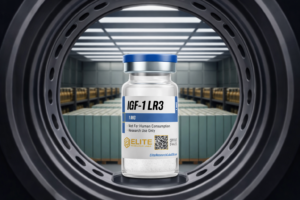
What Is IGF-1 LR3? Complete Research Peptide Guide (Structure, Benefits & Stability)
IGF-1 LR3 is a widely studied research peptide known for

Researchers frequently study peptides to better understand peptide signaling, peptide structure, and how short chains of amino acids behave within laboratory environments. As interest in peptide science continues to grow, many researchers explore different peptides that are commonly discussed within research communities.
This article highlights some of the most commonly referenced research peptides and helps laboratories better understand their role in scientific investigation.
Explore our range of research peptides

Below are several peptides commonly discussed in research environments.
BPC-157 is a peptide frequently discussed in peptide research communities. Researchers studying peptide signaling often explore this compound when examining peptide behavior within laboratory environments.
It is commonly referenced in studies related to tissue signaling and regenerative research models.
Read the BPC-157 research guide.
TB-500 is another peptide frequently referenced in research discussions. Researchers often analyze this peptide when exploring peptide signaling pathways and laboratory peptide studies.
It is often discussed in relation to cellular repair signaling and laboratory-based regenerative studies.
Read the TB-500 research guide.
CJC-1295 is commonly discussed in peptide research related to growth hormone signaling and peptide stability within laboratory models.
Researchers frequently analyze this peptide in controlled environments to study hormone-related signaling pathways.
Ipamorelin is frequently referenced in peptide research communities when discussing peptide signaling pathways and peptide receptor interactions in laboratory studies.
It is often studied alongside other peptides to understand receptor-specific responses in laboratory conditions.
Semax is a peptide commonly referenced in peptide research discussions related to neuropeptide studies and laboratory peptide analysis.
It is often explored in research focused on neurological signaling pathways.
Selank is another peptide frequently mentioned in research environments when discussing peptide interactions and laboratory peptide studies.
Researchers often include it in studies involving neurochemical signaling and peptide-based interactions.
GHK-Cu is often studied in peptide research communities examining copper peptides and peptide signaling in laboratory models.
It is widely referenced in studies involving extracellular matrix signaling and peptide interactions.
Researchers analyze peptides to better understand how amino acid chains interact within biological systems. Peptides are frequently explored in laboratory environments to study signaling pathways, protein interactions, and cellular communication.
This research helps scientists gain deeper insights into complex biological mechanisms and experimental models.
Because peptides play a role in many biological processes, researchers continue expanding the range of peptides studied within laboratory research.
When working with research peptides, laboratories frequently verify compound purity using Certificates of Analysis (COA).
COA reports provide detailed information about compound purity, structure verification, and batch consistency.
Verify peptide COA reports.
Research peptides are short chains of amino acids studied in laboratories to understand biological processes and cellular signaling.
Purity ensures accurate research results and reliable experimental outcomes in laboratory studies.
Researchers can verify peptide quality through COA (Certificate of Analysis) reports provided by laboratories.
Research peptides continue to be an important area of study within laboratory science. As researchers explore peptide signaling and peptide interactions, the list of peptides studied in laboratory environments continues to expand.
Having a structured understanding of commonly studied peptides helps laboratories improve research accuracy and efficiency.
Explore research-grade peptides for laboratory use.
Understanding the variety of peptides discussed within research communities can help laboratories better navigate peptide research topics and scientific studies.
IGF-1 LR3 is a widely studied research peptide known for
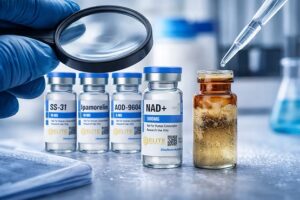
Research peptides can degrade over time, affecting their stability, purity,

Research peptide storage directly impacts stability, purity, and experimental accuracy.
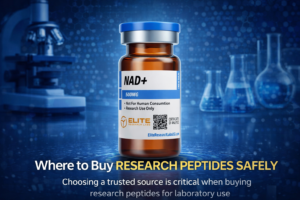
Choosing a reliable source for research peptides is essential to