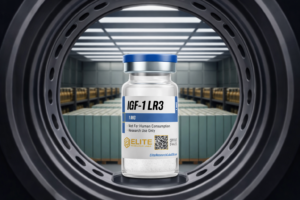
What Is IGF-1 LR3? Complete Research Peptide Guide (Structure, Benefits & Stability)
IGF-1 LR3 is a widely studied research peptide known for

CJC-1295 and Ipamorelin are two widely discussed research peptides in laboratory environments, often compared for their roles in peptide signaling, stability, and growth hormone pathway research. This guide provides a clear scientific comparison to help researchers understand their differences.
Researchers frequently compare peptides when examining peptide signaling, peptide stability, and laboratory research models. Two peptides commonly discussed within peptide research communities are CJC-1295 and Ipamorelin.
Understanding how these peptides are analyzed in research settings helps laboratories design more precise experimental models and improve data accuracy.
In this guide, we explore the differences between these peptides, how they are discussed within research environments, and how researchers compare peptide structures within laboratory studies.
Explore our range of research peptides to support laboratory studies.

CJC-1295 and Ipamorelin are both peptides frequently referenced in research discussions related to growth hormone signaling pathways and peptide interactions within laboratory models.
Researchers often examine these peptides together when studying peptide structure, peptide signaling, and laboratory peptide research environments.
While both peptides are studied in similar research areas, they are often analyzed for their differences in stability, interaction mechanisms, and signaling behavior.
CJC-1295 is a synthetic peptide frequently discussed in peptide research communities. Researchers examining peptide signaling pathways often explore compounds like CJC-1295 when studying laboratory peptide models.
It is commonly referenced in research focused on growth hormone-releasing hormone (GHRH) pathways and peptide stability within laboratory environments.
View detailed information about CJC-1295 in our research catalog.
Ipamorelin is another peptide commonly referenced in peptide research discussions. Within laboratory environments, researchers often examine Ipamorelin when studying peptide signaling pathways and peptide stability in research models.
It is often discussed in relation to growth hormone secretagogue (GHS) pathways and receptor-specific peptide interactions.
Learn more about Ipamorelin research peptide.
Although both peptides are studied in similar research areas, they differ in several important aspects:
These differences help researchers select appropriate compounds depending on their study objectives.
Peptide comparison studies allow researchers to analyze how different peptide compounds interact within laboratory models.
Comparing peptides such as CJC-1295 and Ipamorelin can help researchers better understand peptide behavior, signaling mechanisms, and laboratory peptide research environments.
Such comparisons are essential for identifying how different peptides influence biological pathways under controlled laboratory conditions.
When working with research peptides, laboratories often verify compound purity using Certificates of Analysis (COA).
COA testing ensures that peptide compounds meet strict laboratory standards for purity, identity, and consistency.
CJC-1295 and Ipamorelin differ in their mechanisms of action, stability, and receptor interactions in laboratory research settings.
Researchers compare them to better understand peptide signaling pathways and biological responses in controlled environments.
No, these peptides are strictly intended for laboratory research only.
Comparisons between peptides such as CJC-1295 and Ipamorelin continue to be common within peptide research discussions. Researchers studying peptide signaling often analyze multiple compounds to better understand peptide behavior within laboratory environments.
Explore our research-grade peptides to support your laboratory research.
By understanding these differences, laboratories can make more informed decisions when selecting peptides for experimental studies.
IGF-1 LR3 is a widely studied research peptide known for

Research peptides can degrade over time, affecting their stability, purity,

Research peptide storage directly impacts stability, purity, and experimental accuracy.

Choosing a reliable source for research peptides is essential to