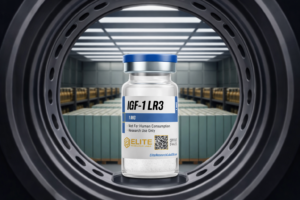
What Is IGF-1 LR3? Complete Research Peptide Guide (Structure, Benefits & Stability)
IGF-1 LR3 is a widely studied research peptide known for

AOD-9604 is a research peptide studied for its role in fat metabolism, metabolic signaling, and receptor-specific activity in controlled laboratory environments. Understanding its mechanism helps researchers explore lipid regulation and peptide-based pathways more effectively.
AOD-9604 is a synthetic peptide fragment studied in laboratory environments for its interaction with metabolic signaling pathways. As a modified fragment of human growth hormone, the AOD-9604 research peptide is commonly examined for its role in lipid metabolism and receptor-specific activity.
Peptides like AOD-9604 are widely used in research to study targeted biological processes without broader hormonal effects.
AOD-9604 is part of a broader category of research peptides used in laboratory studies designed to explore biological signaling systems.
Explore our research peptide collection

AOD-9604 is derived from a specific region of growth hormone and is studied for its targeted interaction with metabolic pathways. Unlike full-length growth hormone, it is investigated for selective receptor activity without broader hormonal signaling effects.
This selective activity makes AOD-9604 useful for studying fat metabolism without influencing overall hormone levels.
Researchers often examine the AOD-9604 research peptide alongside other metabolic compounds to understand differences in signaling pathways.
Comparative studies help researchers identify how different peptides interact with metabolic receptors.
AOD-9604 is studied for its influence on lipid metabolism and signaling pathways associated with fat regulation.
Understanding the mechanism of action helps researchers analyze how peptides affect cellular processes.
Laboratory research focuses on:
These mechanisms provide insights into how fat metabolism is regulated at a molecular level.
AOD-9604 is evaluated in laboratory research for:
These applications help researchers better understand metabolic disorders and signaling pathways.
Researchers studying metabolic peptides may also compare AOD-9604 with compounds such as tirzepatide research peptide and semaglutide research peptide to evaluate pathway differences.
Such comparisons allow deeper insights into peptide-based metabolic research.
AOD-9604 is typically supplied in lyophilized form to maintain stability prior to use in laboratory settings.
Lyophilized peptides offer longer shelf life and improved stability before reconstitution.
Researchers should understand proper preparation methods, including peptide reconstitution in research settings, to ensure consistent experimental conditions.
Proper handling reduces variability and improves research accuracyLearn more about peptide storage and handling
High-quality research requires verified compounds supported by analytical testing such as HPLC and mass spectrometry.
Analytical testing confirms peptide purity, identity, and quality before use in experiments.
For this reason, laboratories prioritize COA verified research peptides before conducting experimental studies.
View COA reports and batch verification
COA verification ensures transparency and builds trust in research materials.
AOD-9604 represents a targeted approach to studying metabolic pathways and lipid signaling systems. Its selective activity makes it a valuable compound in laboratory research focused on peptide-specific mechanisms.
Its ability to target fat metabolism pathways makes it important for metabolic research studies.
Reliable peptide quality ensures accurate and reproducible experimental outcomes.
AOD-9604 is used to study fat metabolism, peptide signaling, and metabolic pathways in laboratory environments.
It interacts with specific receptors involved in lipid metabolism without affecting full hormonal activity.
COA verifies purity, composition, and quality, ensuring reliable experimental results.
AOD-9604 is an important research peptide for studying fat metabolism and signaling pathways. Its selective mechanism allows researchers to explore targeted biological processes with greater precision.
Using high-quality, verified peptides improves data accuracy and experimental reliability.
Explore our research-grade peptides and verified COA database
By following proper handling and sourcing practices, researchers can achieve more consistent and meaningful results.
IGF-1 LR3 is a widely studied research peptide known for
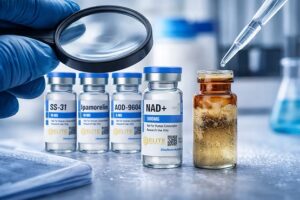
Research peptides can degrade over time, affecting their stability, purity,

Research peptide storage directly impacts stability, purity, and experimental accuracy.
Choosing a reliable source for research peptides is essential to