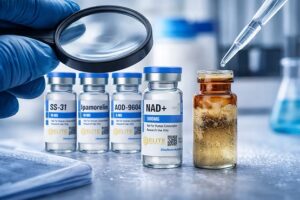
Reconstitution in research settings refers to the process of preparing lyophilized peptides into usable solutions for laboratory studies. This guide simplifies the concept, helping researchers understand the process with clarity, confidence, and scientific accuracy.
Introduction to Peptide Reconstitution
For many researchers—especially those new to working with peptides—the idea of reconstituting a peptide can feel overwhelming at first, particularly when working with lyophilized research peptides in scientific research.
The good news is that in controlled laboratory environments, peptide preparation is a manageable and standardized procedure. With the right protocols, careful handling, and an understanding of why each step matters, researchers can approach reconstitution with confidence.
Learn more about our range of research peptides
Understanding how peptides are prepared is an essential step in ensuring accurate and reproducible experimental outcomes.

What Does “Reconstitution” Mean in Research?
In laboratory contexts, reconstitution refers to the process of preparing a peptide from its supplied form (often lyophilized or powdered) into a usable solution for research applications.
Peptides are frequently provided in a dry state to support stability during storage and transport. Before use in experimental workflows, researchers may prepare the material according to their study requirements.
This process ensures that peptides can be used effectively in controlled experiments while maintaining their structural integrity.
It’s important to note that this process is intended strictly for laboratory and educational research purposes, and proper protocols should always be followed in professional research settings.
Why Reconstitution Can Feel Intimidating at First
Reconstitution is often one of the first hands-on steps researchers take when working with peptide materials. For beginners, the pressure to “do it correctly” can create unnecessary anxiety.
Common concerns include:
Fear of contaminating the sample
Uncertainty about storage and stability
Questions about solvent compatibility
Worry about compromising experimental outcomes
While these concerns are valid, they are addressed through standardized lab procedures and proper training.
The Reality: Reconstitution Is a Controlled, Protocol-Driven Process
In professional laboratory settings, peptide preparation is not guesswork.
Researchers typically follow:
Established institutional protocols
Supplier documentation
Sterile handling procedures
Consistent labeling and batch tracking
These structured steps ensure accuracy, repeatability, and reliability across experiments.
When approached methodically, reconstitution becomes simply another part of maintaining reproducibility and reliability in research.
Key Considerations in Peptide Reconstitution
Rather than viewing reconstitution as intimidating, it can be helpful to think of it as a process built around a few core research principles:
Sterile Technique and Clean Handling
Because peptides are sensitive research materials, minimizing contamination is essential. Researchers often work in controlled environments and use sterile tools to maintain sample integrity.
Proper sterile technique directly impacts the reliability of experimental results.
Stability and Storage Awareness
Peptide stability can be influenced by temperature, moisture, and repeated handling, which is why understanding peptide stability in research environments is important for maintaining sample integrity.
Proper storage conditions help preserve peptide structure and prevent degradation over time.
Documentation and Traceability
In research, consistency matters. Clear labeling, batch identification, and preparation notes support reproducibility across experiments and teams.
to verify purity, composition, and analytical validation of each compound.
H3: Experimental Consistency
Preparation methods should align with the intended experimental design. Consistency in handling helps reduce variability and improves confidence in research outcomes.
Even small inconsistencies in preparation can impact experimental data, making standardized workflows essential.
Why Confidence Comes with Experience and Systems
Many researchers find that once they understand the purpose behind proper peptide preparation, the process becomes far less intimidating.
Reconstitution is not about complexity—it’s about care.
With experience, researchers develop confidence by following repeatable systems and validated procedures.
With good lab practices, standardized workflows, and reliable sourcing, researchers can focus less on uncertainty and more on generating meaningful data.
The Role of High-Quality Research Materials
Peptide stability and preparation begin long before a material reaches the lab bench. Researchers working with metabolic peptides often prioritize verified materials to support consistent experimental conditions.
Quality-focused suppliers support research teams by providing:
- Clearly labeled research-only materials
- Verified purity through analytical testing
- Batch traceability for documentation
- Packaging designed to protect stability
View verified lab results in our COA database
Access to verified documentation helps researchers maintain transparency and confidence in their materials.
At Elite Research Labs, materials are intended strictly for laboratory and educational research use only, with an emphasis on transparency and consistency to support responsible research practices.
Frequently Asked Questions (FAQ)
What is peptide reconstitution?
It is the process of preparing a peptide from a dry (lyophilized) form into a solution for laboratory research use.
Why are peptides supplied in dry form?
Dry (lyophilized) form improves stability during storage and transport.
Is reconstitution difficult for beginners?
No, when proper protocols are followed, it becomes a simple and repeatable laboratory process.
Conclusion
Reconstituting peptides in research settings may seem intimidating at first, but it doesn’t have to be. With proper protocols, careful handling, and an understanding of stability and consistency, peptide preparation becomes a manageable part of the research process.
Explore our research-grade peptides
to support consistent and reliable laboratory workflows.
For researchers, confidence comes from clarity, quality materials, and standardized lab practices—not from rushing or overcomplicating the workflow.