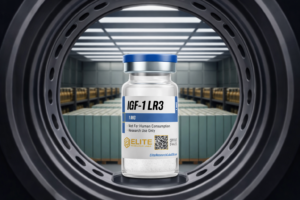
What Is IGF-1 LR3? Complete Research Peptide Guide (Structure, Benefits & Stability)
IGF-1 LR3 is a widely studied research peptide known for

Lyophilized peptides are widely used in laboratory research due to their stability, extended shelf life, and reliability in controlled scientific environments. This guide explains what lyophilized peptides are, why they are used, and how they support accurate and reproducible research outcomes.
Peptides play an increasingly important role in modern laboratory research, offering scientists precise tools for studying biological pathways, receptor interactions, and molecular signaling.
One term researchers frequently encounter when sourcing peptide materials is “lyophilized,” which refers to peptides that have been freeze-dried to support stability before laboratory preparation and reconstitution.
Understanding how lyophilized peptides function is essential for researchers working with sensitive compounds and long-term experimental studies.
For those new to peptide handling, the concept of lyophilized peptides may sound highly technical or intimidating. In reality, lyophilization is a widely used and highly practical method that supports stability, consistency, and long-term research usability.
Explore our range of research peptides

Lyophilization, often referred to as freeze-drying, is a preservation process that removes water from a material under controlled conditions. In peptide research, this process results in a dry, stable form of the peptide—typically a powder or solid residue.
Lyophilized peptides are commonly supplied in this form because it helps maintain molecular integrity during:
This process allows researchers to work with peptides that maintain their structural stability until they are ready for controlled laboratory preparation.
Rather than being a complication, lyophilization is often considered a standard best practice in research material preparation.
Peptides are structurally sensitive molecules. Over time, moisture and temperature fluctuations can affect their stability. Lyophilization provides a way to reduce these risks by creating a dry environment that supports preservation.
This makes lyophilized peptides especially valuable in experiments where precision and repeatability are critical.
Researchers value lyophilized peptides because they offer:
Removing water reduces the likelihood of hydrolysis and other degradation pathways that may occur in liquid form.
Dry peptides are often more stable for longer periods when stored properly under recommended conditions.
Lyophilized materials are less vulnerable to short-term temperature changes during shipping compared to fully reconstituted solutions.
In research settings, lyophilized peptides are typically incorporated into experiments through controlled preparation procedures aligned with laboratory protocols.
Because research workflows often require precision and reproducibility, the ability to begin with a stable, dry material helps ensure:
This consistency is essential for laboratories conducting repeatable and high-accuracy experimental studies.
While lyophilized peptides are generally stable, researchers still prioritize careful handling to protect integrity.
Because lyophilized peptides are dry, exposure to humidity can impact stability. Professional labs often minimize unnecessary air exposure during handling.
Storage recommendations vary by peptide type, but low-temperature environments are commonly used to support long-term stability.
Maintaining clear records of peptide batches and preparation methods supports reproducibility and experimental reliability.
Proper handling practices help ensure that peptide quality remains consistent throughout the research process.
One of the greatest advantages of lyophilized peptides is that they support standardization. In scientific research, reproducibility is essential.
Starting with a stable and verified material allows researchers to maintain consistent experimental conditions across multiple studies and timelines.
For example, researchers studying newer metabolic peptides such as Retatrutide often prioritize stability and verified purity when evaluating materials.
Lyophilized peptides are often preferred in studies where:
Not all peptide materials are created equal. Lyophilization is only one part of the overall quality process.
Researchers also look for:
High-quality peptides are typically supported by detailed testing reports to confirm purity and consistency.
View our COA (Certificate of Analysis) database
Lyophilized peptides are freeze-dried peptides that are converted into a stable, dry form for laboratory research use.
Freeze-drying removes moisture to improve stability, extend shelf life, and protect peptide structure.
They are typically stored in low-temperature and low-moisture environments to maintain stability.
Conclusion
Lyophilized peptides are a standard and highly valuable form of research material used across scientific disciplines. By providing enhanced stability, extended shelf life, and consistent starting conditions, lyophilization supports the reliability and reproducibility that modern research demands.
Explore our research-grade peptides
Understanding lyophilized peptides helps researchers make informed decisions when selecting and handling materials for scientific studies.
Elite Research Labs is proud to support the research community with high-quality peptide materials intended solely for laboratory research and education.
IGF-1 LR3 is a widely studied research peptide known for

Research peptides can degrade over time, affecting their stability, purity,

Research peptide storage directly impacts stability, purity, and experimental accuracy.
Choosing a reliable source for research peptides is essential to